Micro Weather Stations (MWS)
Foundational Environmental Sensing
Overview
Students build and deploy real environmental monitoring systems while exploring temperature, humidity, pressure, light, air quality, GPS, and environmental data. Students compare their measurements with professional weather stations and learn how scientists collect and interpret information about the world around them.
The Micro Weather Station is the foundational entry point into the D4T Environmental exploration platform. Students start by building compact portable environmental monitoring systems that measure conditions such as temperature, humidity, pressure, air quality trends, and light. This module is where students first discover that data is real, visible, and influenced by both environment and design.
What students do
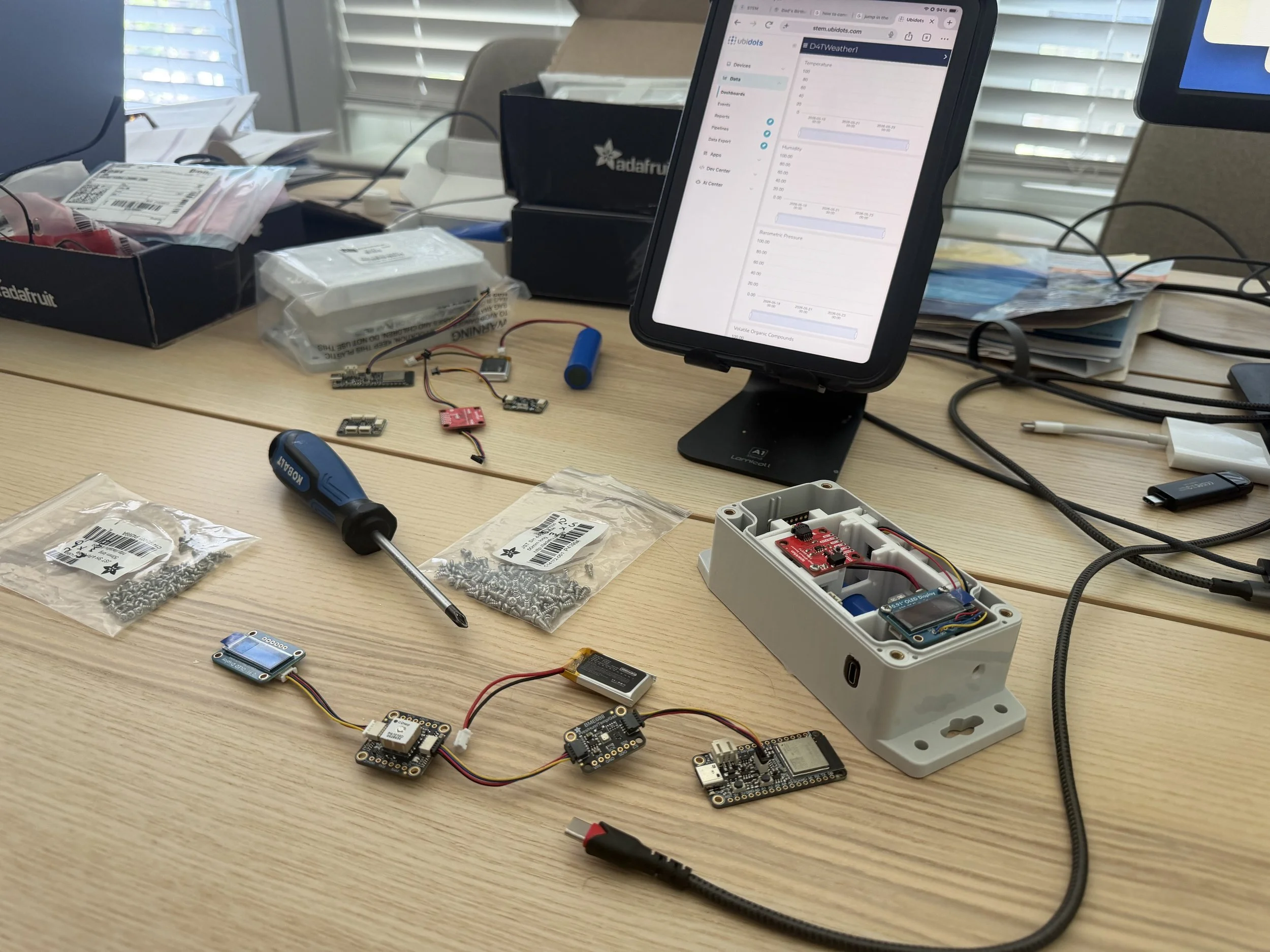
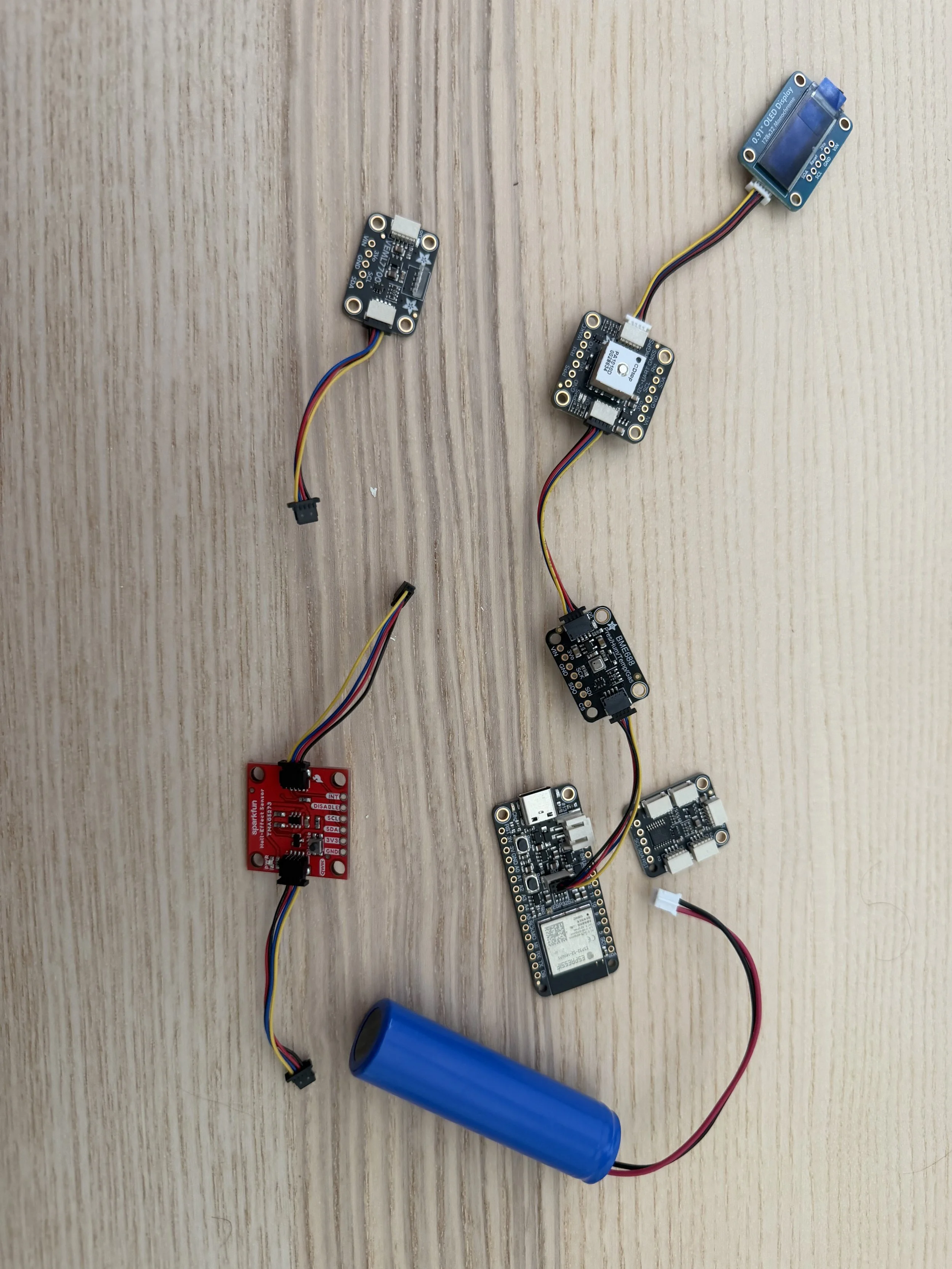
• Assemble sensor boards, microcontrollers, connectors, and enclosures.
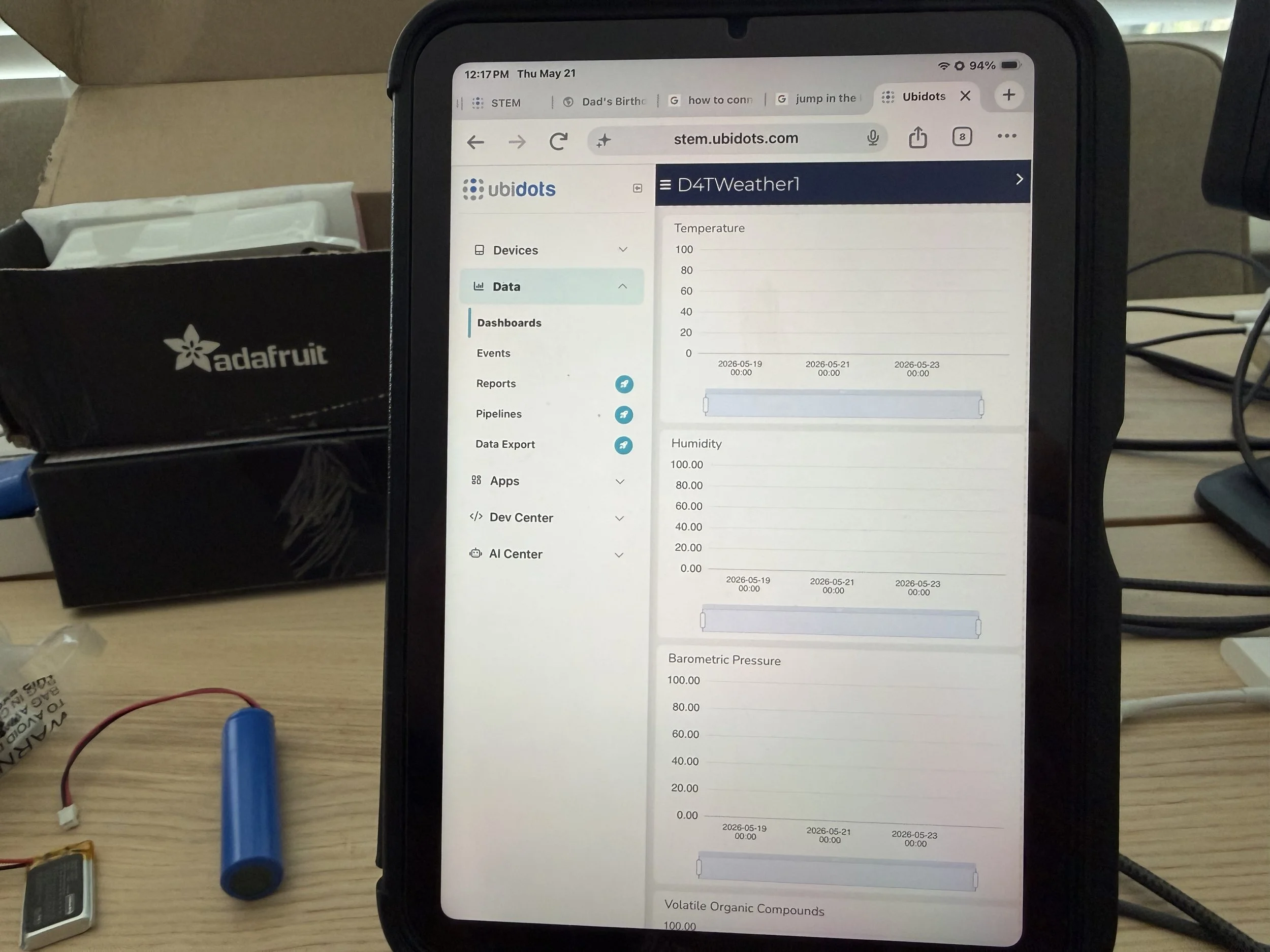
• Power up a working system and view live readings.
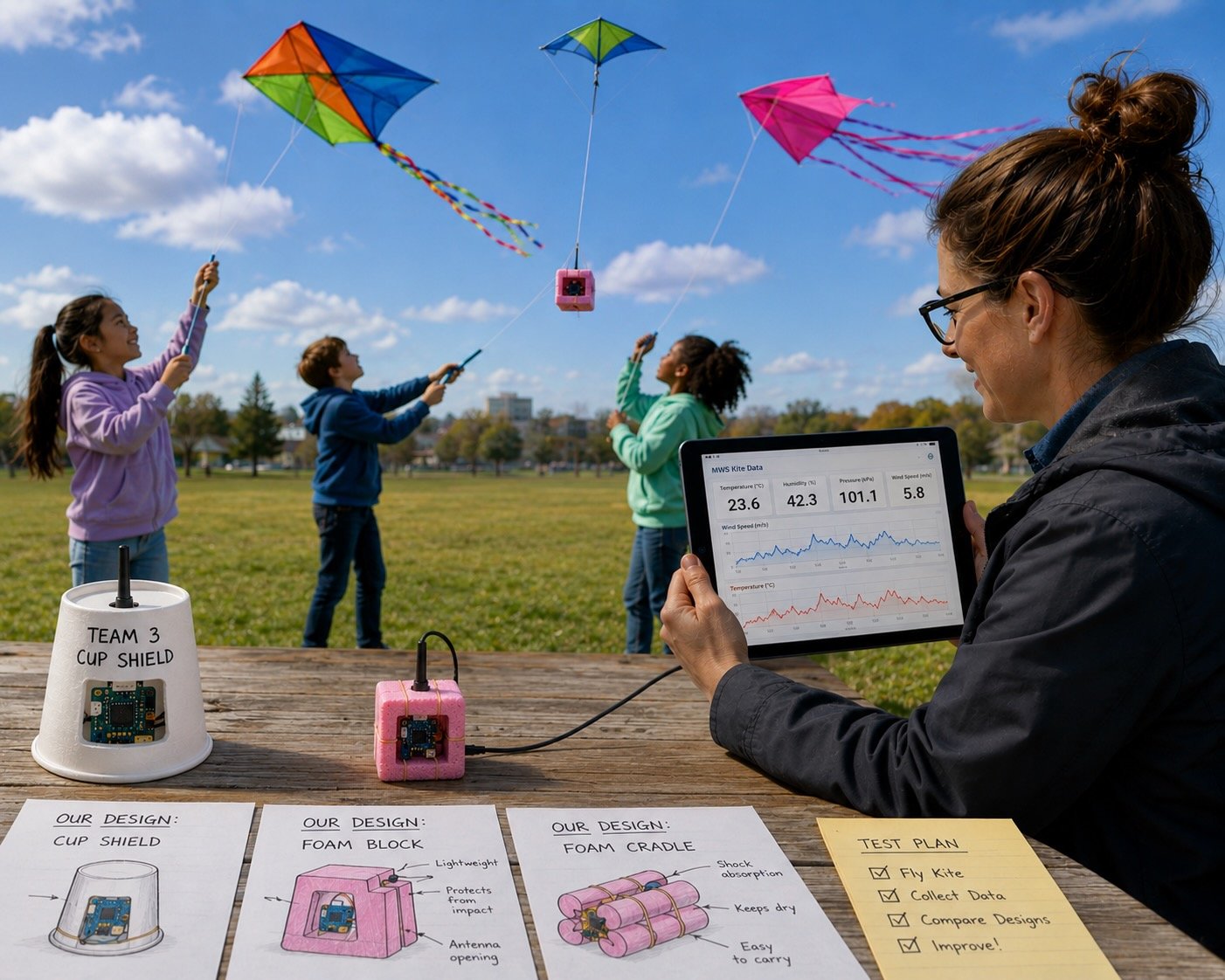
• Test readings in sun and shade, near the ground and at height (Including kites ), sheltered and exposed.
• Deploy multiple units across different locations and compare results.
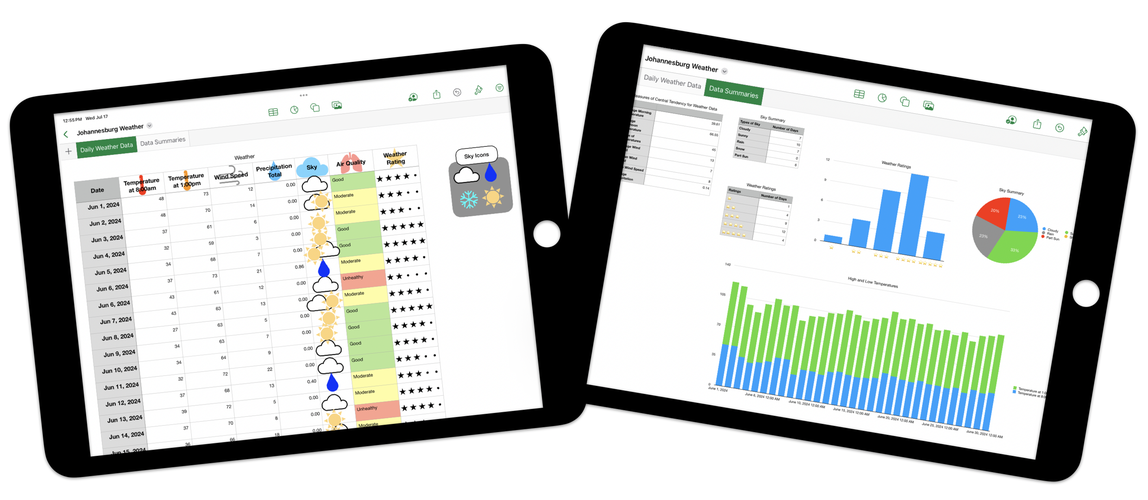
• Compare their data with trusted reference sources such as local observatories or public weather data.
What students learn
• Sensors are not magic; measurements depend on placement, airflow, exposure, shielding, and design choices.
• Environmental variation can be observed, measured, and explained.
• Professional observatories and student-built systems are engaged in the same scientific process.
• Ownership increases attention: students care more deeply about data from systems they built themselves.
How this module integrates with the portfolio
The MWS provides a baseline for expanded technology exploration. It connects naturally to GPS mapping, LoRa communications, Tidal monitoring stations, kite-based measurements, environmental imaging and long-term monitoring. Once students understand this module, every other program has a familiar anchor.
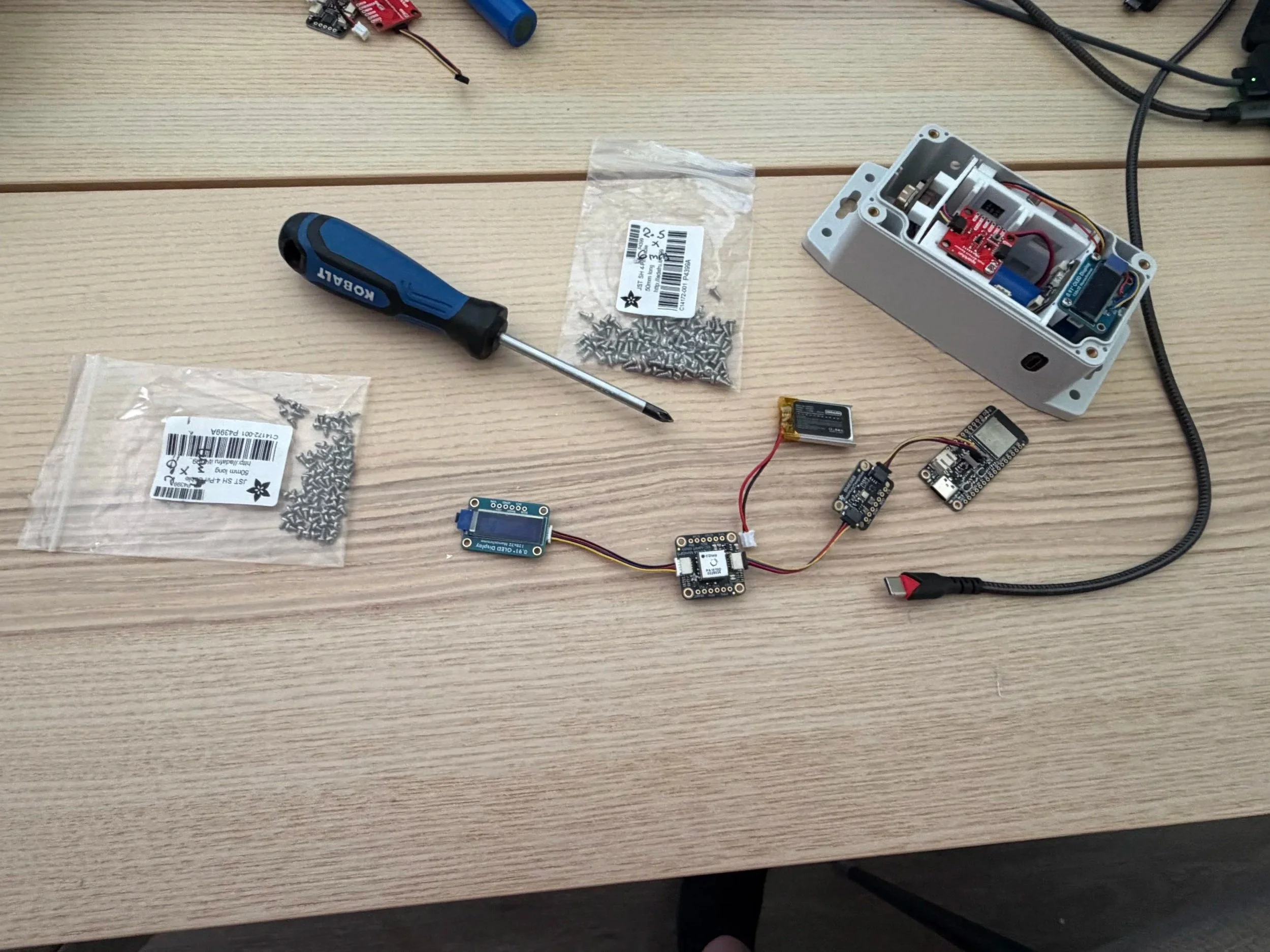
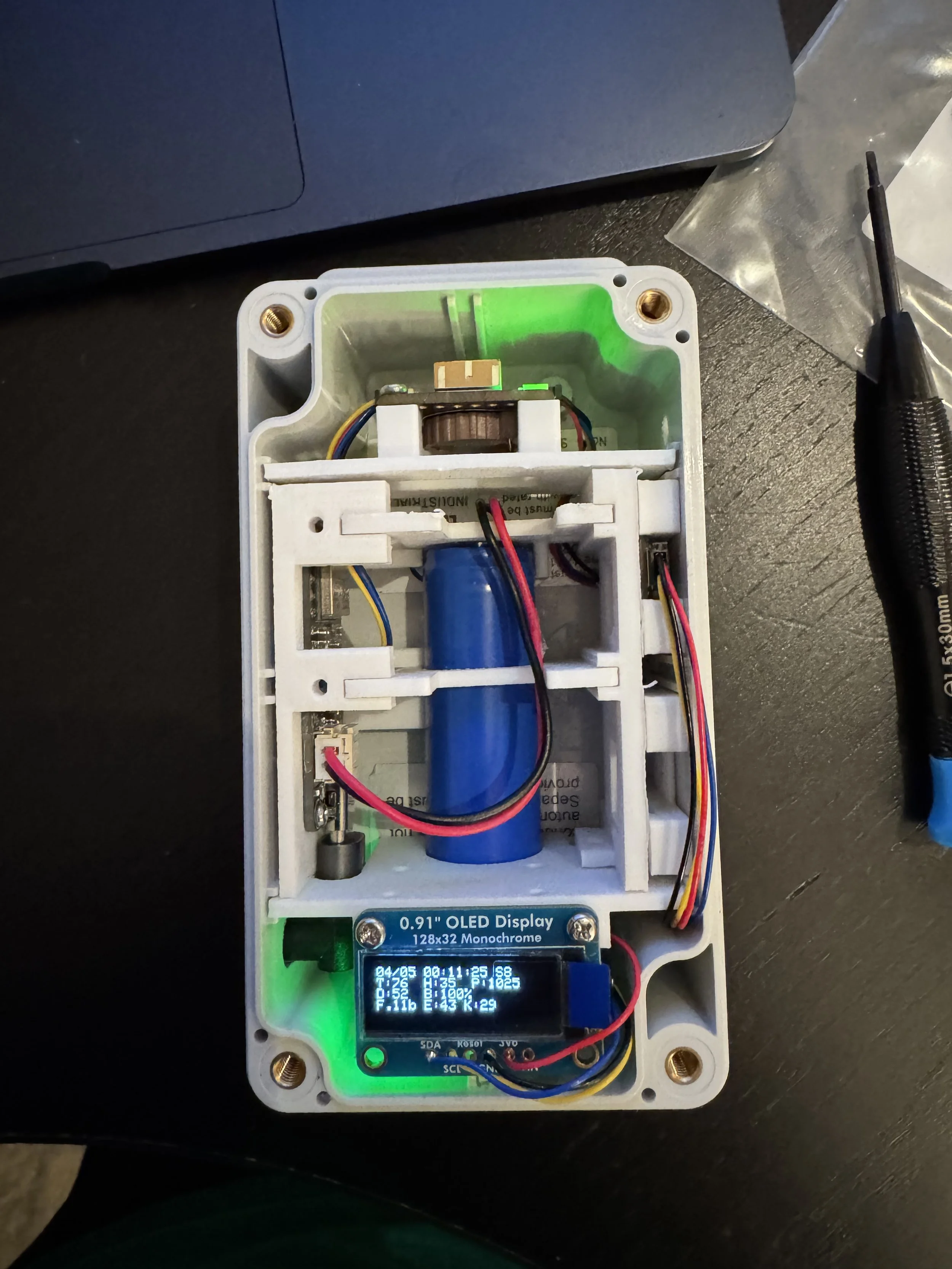
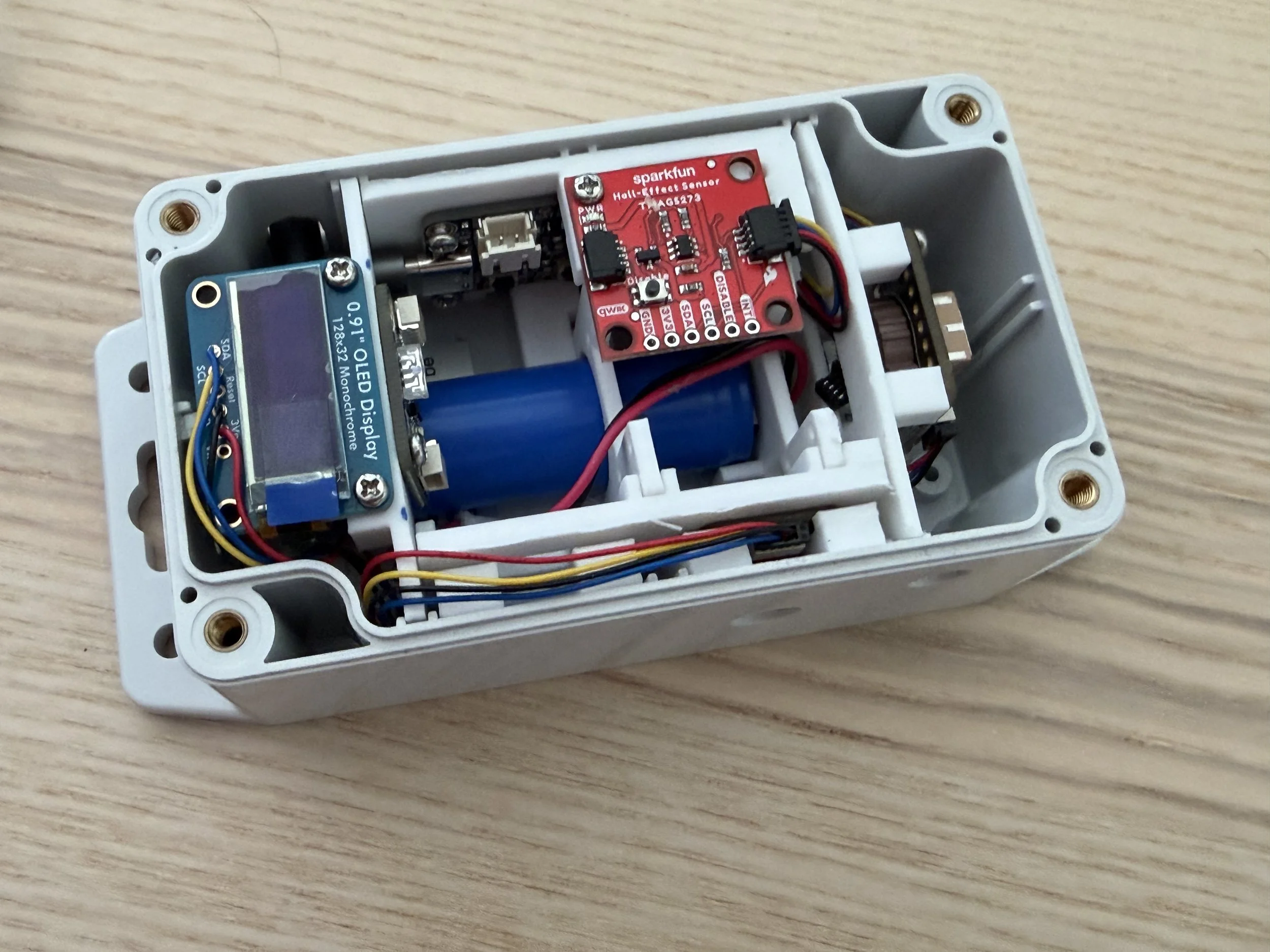
Portable MWS unit